How Asset Intelligence works
A discipline that connects your building’s information to the decisions that depend on it.

How the discipline comes together
Asset Intelligence works by creating a structured and governed information foundation that supports every stage of the building lifecycle. It ensures the information needed to keep buildings safe, compliant and performing is created, maintained and accessible to the people responsible for making decisions.
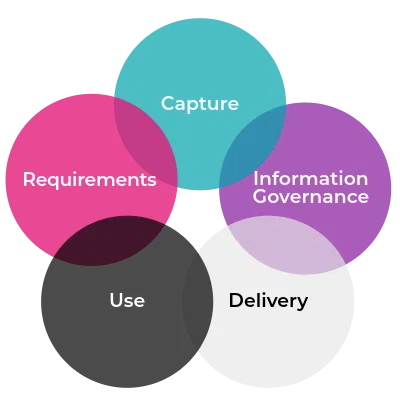
The discipline spans five defined functions. Together they determine what information is needed, capture it at the right moments, govern it over time, deliver it to the right people and turn it into intelligence that supports action.
Start by determining the information you need
Asset Intelligence begins with clarity. Most organisations do not have defined information requirements for their estate. They rely on whatever was produced during construction or whatever has accumulated over time.
The discipline starts by identifying:
- What information the organisation needs
- Why it needs it
- How that information should be structured
- How it should be produced and maintained
This step prevents unnecessary surveys, avoids future recovery costs and gives the supply chain clear expectations.

Capture information the right way
Capture is where information is created or recovered. It works differently depending on whether the building is new or already in use.
For new projects
Asset Intelligence manages the production of information during design and construction. It guides the supply chain, validates outputs and ensures the information produced meets operational needs rather than simply meeting handover requirements.
For existing estates
Asset Intelligence identifies what information already exists, assesses its quality and targets recovery work only at genuine gaps. This prevents duplication and avoids recreating information that is already accurate.
Capture closes the first cause of the Performance Gap by ensuring information is correct at the moment it enters the lifecycle.

Govern information so it stays accurate
The quality of information degrades unless it is governed. Information Governance defines how asset information should be updated, who is responsible for accuracy and how changes are checked and approved.
This includes:
- Assigning information ownership
- Defining governance roles for updates and approvals
- Establishing rules for change control
- Maintaining structured data over time
Information Governance prevents the fragmentation that occurs through fit‑outs, equipment changes and FM transitions. It also supports Golden Thread requirements and audit readiness.

Deliver information to the people who need it
Information only adds value when the right people can find it quickly. Asset Intelligence makes information accessible across estates, FM and compliance teams, not just specialists or data managers.
Delivery focuses on:
- Making information easy to locate
- Ensuring it is presented in simple and usable formats
- Connecting the AIM to key systems such as CAFM or BMS
- Supporting smooth information exchange during supplier transitions
If operational teams cannot find or trust the information, the discipline has failed regardless of how well data is structured underneath.

Turn structured information into operational intelligence
This is the point where information becomes intelligence. When information is structured, governed and accessible, it can be used to support decisions that improve safety, efficiency and performance.
Asset Intelligence enables:
- Evidence‑based capital planning
- Performance measurement against design targets
- Reduced safety risk and stronger compliance decisions
- Portfolio benchmarking
- Carbon and energy reporting based on accurate data
This is where the organisation feels the impact. Better information leads to better outcomes.

How the functions work together
Individually, each function solves a specific problem. Together they close the Performance Gap.
- Requirements prevent confusion and unnecessary recovery
- Capture creates usable information from the start
- Information Governance keeps information accurate as buildings change
- Delivery brings information to the right people
- Use turns information into intelligence that drives outcomes
This creates a complete lifecycle discipline that works for both new projects and existing estates.
Understanding maturity and prioritisation
The Asset Intelligence Maturity Model™ provides a structured assessment of how an organisation is performing across the five Asset Intelligence functions. It identifies where capability is strong, where gaps exist and which improvements will unlock the greatest value next.
Glider uses the Maturity Model so customers can assess their current position and plan practical, prioritised routes to stronger Asset Intelligence. This ensures effort is focused where it matters most, rather than attempting to address every issue at once.
Asset Intelligence in practice
The discipline becomes real when it is embedded into daily operations. This means:
- Information requirements in procurement
- Structured handover for new projects
- Targeted recovery for existing estates
- Clear ownership and governance rules
- Connected systems that use the same information
- A structured, governed information foundation that supports decisions
The goal is simple. Make sure the people responsible for buildings can find, trust and use the information they need.
Progressive confidence across the lifecycle
Asset Intelligence is designed to be applied progressively. Organisations do not need complete or perfect information across the entire estate to begin. Instead, they improve capability step by step, building confidence as information becomes more accurate, governed and usable.
This ‘progressive confidence’ model allows teams to move forward pragmatically strengthening specific functions, addressing priority risks and expanding scope as confidence in the information foundation grows across the lifecycle.