The Asset Intelligence pathways
Two practical routes to closing the Performance Gap for every estate.

Why the Asset Intelligence pathways matter
Every organisation begins its Asset Intelligence journey from a different place. Some are delivering new buildings where structured asset information can be created correctly from the start. Others are responsible for large, complex estates where information is missing, fragmented or unreliable.
The Asset Intelligence pathways provide a simple structure for both situations. They show how to build a reliable information foundation whether your estate is new, existing or a mix of both.
The two pathways
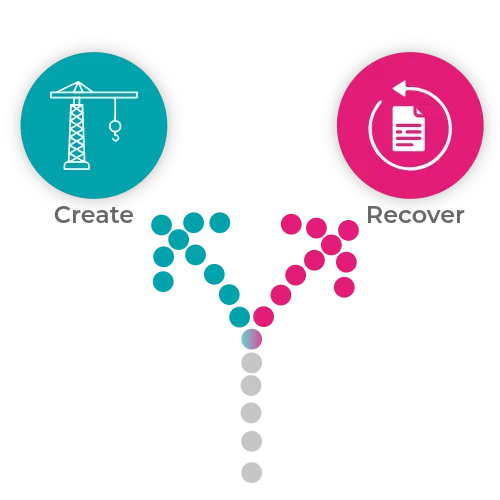
Asset Intelligence has two starting points. You are either creating information for a building that does not yet exist or recovering structured asset information for a building that already does.
These are what we refer to as the Create and Recover pathways. Most organisations need both.
Both the Create and Recover pathways converge on the same governed Asset Information Model and support the same decision quality and outcome achievement across the estate.
The Create pathway for new projects
The Create pathway applies when a building is under design, construction or major refurbishment. It focuses on creating structured, accurate and governed information before the building enters operation.
What the Create pathway does:
- Specifies clear information requirements at the start of the project
- Embeds those requirements into procurement and supply chain contracts
- Manages information production during delivery
- Ensures information is validated and quality‑checked before handover
- Prevents information debt from forming at completion
Without the Create pathway, a building enters operation with gaps, inconsistencies or information overload that operations teams cannot use. This opens the Performance Gap from day one.
When to use it:
- New builds
- Major refurbishments
- Capital programmes
- Projects with BIM and digital handover requirements
The Recover pathway for existing estates
The Recover pathway applies when buildings already exist and information is missing, fragmented or untrusted. This is the most common starting point because most operational estates were never handed over with structured information.
What the Recover pathway does:
- Identifies what information already exists across your estate
- Assesses whether any of it meets your current requirements
- Targets recovery work only at genuine gaps
- Uses structured surveys, data uplift and documentation migration
- Builds a clean, governed Asset Information Model (AIM) from your real baseline
In most cases the problem is not absence, but fragmentation. Information lives across email chains, shared drives, paper files, legacy systems and supplier knowledge that resets every FM contract cycle. The Recover pathway rebuilds trust in the information.
When to use it:
- Large operational estates
- Buildings with no digital handover
- Estates with years of undocumented change
- Environments where compliance confidence is low
Choosing the right pathway for your estate
A simple set of questions anchors the decision:
- Do you have existing buildings with fragmented or untrusted information?
If yes, you need the Recover pathway. - Are you procuring new builds or major refurbishments?
If yes, you need the Create pathway. - Do you have both?
This is the most common scenario. You will need both pathways and can choose the order based on your most urgent driver. - Have you defined your information requirements?
If not, this is the starting point for either pathway.
Whichever pathway you choose to start with, you can continue to build capability over time as confidence in your information grows.
Planning the next step with the maturity model
The Asset Intelligence Maturity Model helps organisations understand where they sit in their Asset Intelligence journey and what to do next. It measures maturity across each of the five functions and highlights which improvements will deliver the most value at the current stage.
Glider uses this model to help organisations plan clear, prioritised pathways whether they are creating new information, recovering existing data or strengthening governance and delivery in operations.
Applying progressive confidence in practice
Applying progressive confidence in practice
Every organisation begins its Asset Intelligence journey from a different position. Some are creating information for new projects, others are recovering information for existing estates. In most cases, both scenarios apply.
Asset Intelligence is intentionally built around ‘progressive Confidence’. Organisations assess where they are today, address the most critical gaps first and expand capability progressively over time. This allows teams to prioritise the work that delivers the greatest value without needing to solve every information challenge at once.
How Glider supports both Asset Intelligence pathways
Glider provides the platforms, services and expertise needed to deliver both the Create and Recover pathways:
- Digital handover services for the Create pathway
- Asset Information Management Services for the Recover pathway
- Implementation, consultancy and training to support both
- Asset Information Management software for both
Together they give organisations a complete route to Asset Intelligence.